
GenAI In Business Automation
GenAI in Business Automation: Transforming Workflows, Enhancing Productivity, and Driving Intelligent Decision-Making
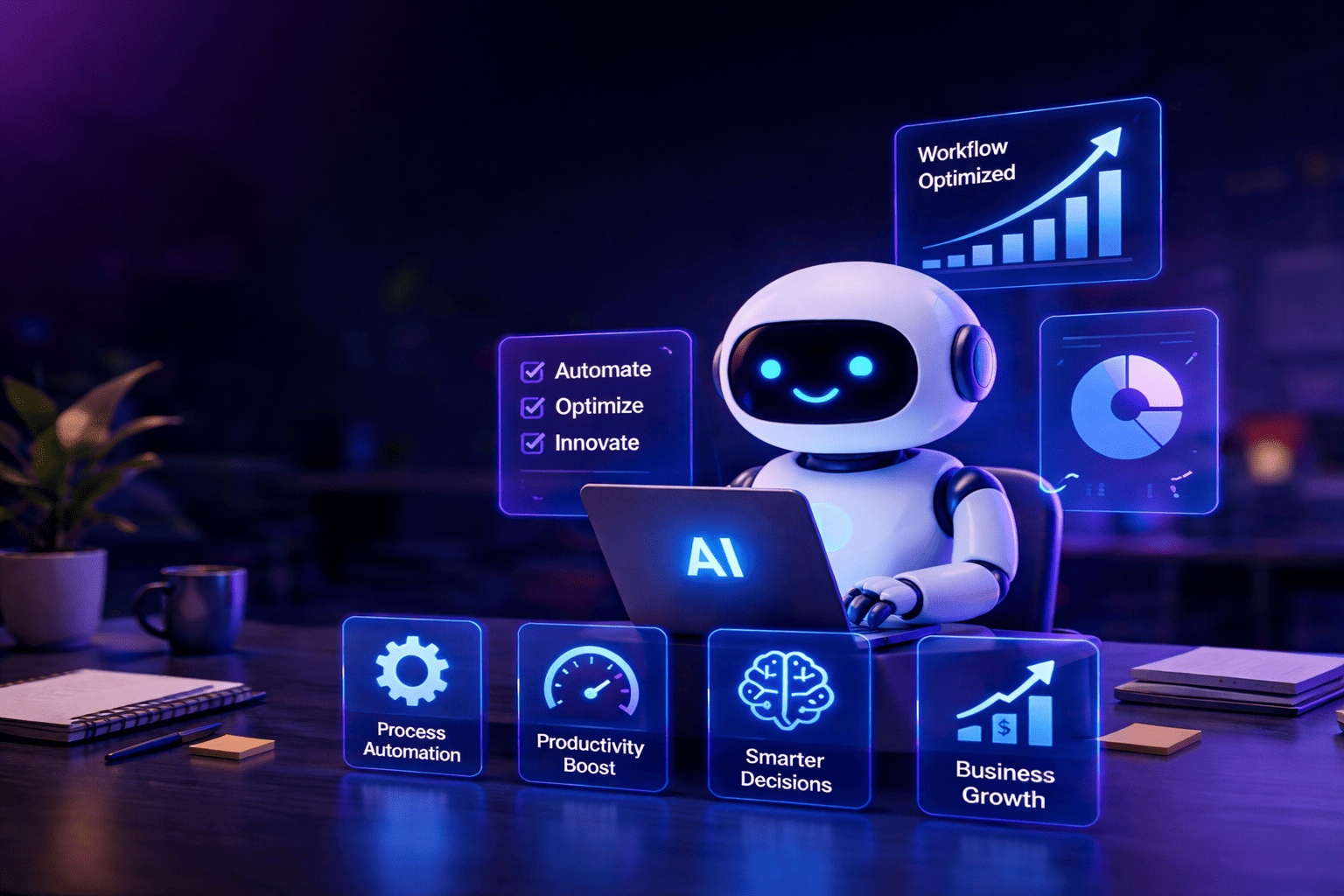
In today’s fast-paced digital economy, businesses are constantly seeking smarter ways to improve efficiency, reduce operational costs, and enhance decision-making. Generative Artificial Intelligence (GenAI) is emerging as a powerful enabler of business automation, transforming how organizations design workflows, interact with data, and deliver value. By leveraging advanced AI models capable of generating content, analyzing patterns, and automating complex processes, GenAI is redefining modern enterprise operations and unlocking new levels of productivity.
One of the most significant impacts of GenAI in business automation is its ability to streamline workflows. Traditional business processes often involve repetitive manual tasks such as data entry, report generation, customer support responses, and document processing. GenAI-powered systems can automate these tasks with high accuracy and speed, allowing organizations to reduce human effort and focus on strategic activities. For instance, AI-driven automation tools can generate reports, draft emails, and even create business insights in real-time, significantly improving operational efficiency.
Another key advantage of GenAI is its ability to enhance decision-making through intelligent data analysis. Businesses generate vast amounts of structured and unstructured data daily, making it challenging to extract meaningful insights. GenAI can analyze large datasets, identify trends, and generate actionable recommendations, enabling leaders to make informed decisions quickly. Whether it’s forecasting demand, optimizing supply chains, or identifying new market opportunities, GenAI empowers organizations with predictive and data-driven intelligence.
Customer experience is also being transformed by GenAI-driven automation. AI-powered chatbots and virtual assistants can handle customer queries, provide personalized responses, and deliver 24/7 support without human intervention. These systems can understand natural language, learn from interactions, and continuously improve over time, resulting in faster response times and enhanced customer satisfaction. Additionally, GenAI can personalize marketing campaigns by generating targeted content based on user behavior, preferences, and engagement patterns.
In the area of business operations, GenAI enables intelligent process automation across departments such as finance, HR, and IT. For example, in finance, AI can automate invoice processing, fraud detection, and financial forecasting. In human resources, GenAI can assist in resume screening, employee engagement analysis, and training content generation. By automating these functions, organizations can reduce errors, improve accuracy, and achieve greater operational agility.
Despite its advantages, implementing GenAI in business automation comes with challenges. Organizations must ensure data quality, address ethical concerns, and maintain transparency in AI-driven decisions. Additionally, integrating GenAI into existing systems requires careful planning and alignment with business objectives. However, with the right strategy and governance, these challenges can be effectively managed.
Looking ahead, the future of GenAI in business automation is highly promising. As AI technologies continue to evolve, we can expect more advanced capabilities such as autonomous decision-making systems, real-time adaptive workflows, and seamless human-AI collaboration. Businesses that embrace GenAI today will gain a competitive advantage by becoming more agile, innovative, and customer-centric.
In conclusion, GenAI is revolutionizing business automation by transforming workflows, enhancing productivity, and enabling intelligent decision-making. By leveraging the power of AI, organizations can optimize operations, improve customer experiences, and drive sustainable growth in an increasingly digital world.
Another key advantage of GenAI is its ability to enhance decision-making through intelligent data analysis. Businesses generate vast amounts of structured and unstructured data daily, making it challenging to extract meaningful insights. GenAI can analyze large datasets, identify trends, and generate actionable recommendations, enabling leaders to make informed decisions quickly. Whether it’s forecasting demand, optimizing supply chains, or identifying new market opportunities, GenAI empowers organizations with predictive and data-driven intelligence.
Customer experience is also being transformed by GenAI-driven automation. AI-powered chatbots and virtual assistants can handle customer queries, provide personalized responses, and deliver 24/7 support without human intervention. These systems can understand natural language, learn from interactions, and continuously improve over time, resulting in faster response times and enhanced customer satisfaction. Additionally, GenAI can personalize marketing campaigns by generating targeted content based on user behavior, preferences, and engagement patterns.
In the area of business operations, GenAI enables intelligent process automation across departments such as finance, HR, and IT. For example, in finance, AI can automate invoice processing, fraud detection, and financial forecasting. In human resources, GenAI can assist in resume screening, employee engagement analysis, and training content generation. By automating these functions, organizations can reduce errors, improve accuracy, and achieve greater operational agility.
Despite its advantages, implementing GenAI in business automation comes with challenges. Organizations must ensure data quality, address ethical concerns, and maintain transparency in AI-driven decisions. Additionally, integrating GenAI into existing systems requires careful planning and alignment with business objectives. However, with the right strategy and governance, these challenges can be effectively managed.
Looking ahead, the future of GenAI in business automation is highly promising. As AI technologies continue to evolve, we can expect more advanced capabilities such as autonomous decision-making systems, real-time adaptive workflows, and seamless human-AI collaboration. Businesses that embrace GenAI today will gain a competitive advantage by becoming more agile, innovative, and customer-centric.
In conclusion, GenAI is revolutionizing business automation by transforming workflows, enhancing productivity, and enabling intelligent decision-making. By leveraging the power of AI, organizations can optimize operations, improve customer experiences, and drive sustainable growth in an increasingly digital world.
-
Our believe is about problem-solving involves asking the right questions until we understand what success means and how to reach it.