
AI For Supply Chain Optimization
AI for Supply Chain Optimization: Driving Efficiency, Forecasting Demand, and Reducing Operational Risks
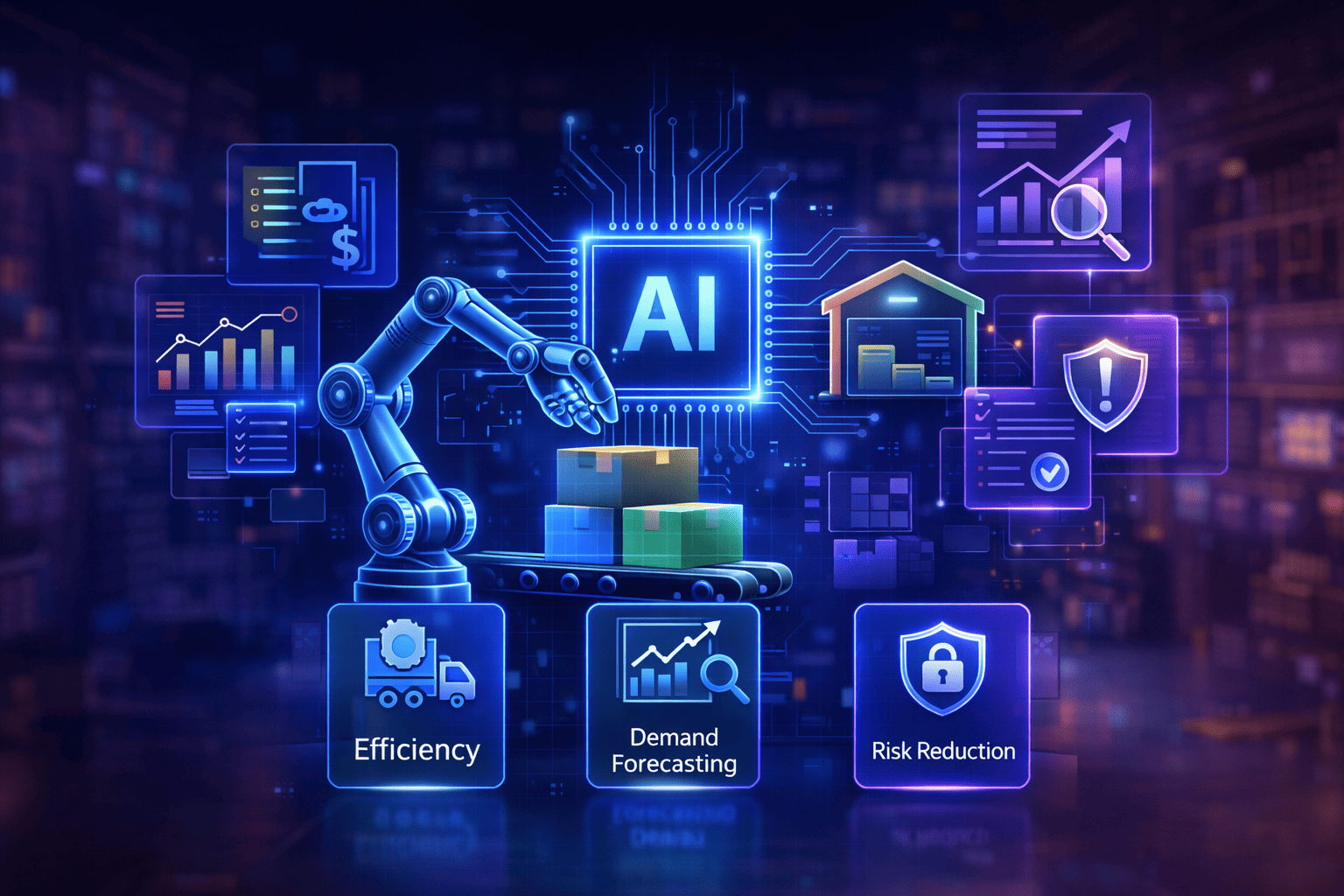
Artificial Intelligence (AI) is transforming supply chain operations by enabling businesses to make faster, smarter, and more data-driven decisions. In today’s dynamic global market, organizations face challenges such as demand fluctuations, inventory inefficiencies, and operational risks. AI-powered solutions are helping businesses overcome these challenges by optimizing processes, improving forecasting accuracy, and enhancing overall supply chain performance. One of the most impactful applications of AI in supply chain optimization is demand forecasting. Traditional forecasting methods often rely on historical data and manual analysis, which can be inaccurate and time-consuming. AI models, on the other hand, can analyze large volumes of real-time and historical data, including market trends, customer behavior, seasonal variations, and external factors such as economic conditions. This enables businesses to predict demand more accurately and align their inventory and production strategies accordingly.
Inventory management is another area where AI delivers significant value. Maintaining the right balance between supply and demand is critical to avoid overstocking or stockouts. AI-powered systems can monitor inventory levels in real-time, predict replenishment needs, and automate stock management processes. By optimizing inventory levels, businesses can reduce storage costs, minimize waste, and ensure product availability for customers.
AI also enhances operational efficiency across the supply chain by automating repetitive tasks and optimizing workflows. From warehouse management to transportation planning, AI-driven automation improves speed and accuracy. For example, AI can optimize delivery routes by analyzing traffic patterns, weather conditions, and delivery schedules, reducing transportation costs and improving delivery times. Additionally, robotics and AI-powered systems in warehouses can streamline picking, packing, and sorting processes, increasing productivity and reducing human error.
Risk management is a critical aspect of supply chain operations, and AI plays a vital role in identifying and mitigating risks. Supply chains are vulnerable to disruptions caused by factors such as supplier delays, geopolitical issues, and natural disasters. AI systems can analyze data from multiple sources to detect potential risks and provide early warnings. This allows organizations to take proactive measures, such as diversifying suppliers or adjusting logistics strategies, to minimize disruptions.
Another important benefit of AI in supply chain optimization is enhanced visibility and transparency. AI-powered dashboards and analytics tools provide real-time insights into supply chain performance, enabling businesses to track shipments, monitor supplier performance, and identify bottlenecks. This visibility helps organizations make informed decisions and respond quickly to changing conditions.
Despite its advantages, implementing AI in supply chains comes with challenges. Organizations need access to high-quality data, robust infrastructure, and skilled resources to effectively deploy AI solutions. Integration with existing systems and ensuring data security are also critical considerations. However, with the right strategy and investment, these challenges can be successfully addressed.
Looking ahead, the future of AI in supply chain optimization is highly promising. Emerging technologies such as predictive analytics, digital twins, and autonomous logistics systems will further enhance efficiency and decision-making capabilities. Businesses that adopt AI-driven supply chain solutions will gain a competitive advantage by becoming more agile, resilient, and customer-focused.
In conclusion, AI is revolutionizing supply chain optimization by improving demand forecasting, enhancing inventory management, increasing operational efficiency, and reducing risks. By leveraging AI-powered insights, organizations can build smarter and more responsive supply chains that drive growth and deliver superior customer experiences.
AI also enhances operational efficiency across the supply chain by automating repetitive tasks and optimizing workflows. From warehouse management to transportation planning, AI-driven automation improves speed and accuracy. For example, AI can optimize delivery routes by analyzing traffic patterns, weather conditions, and delivery schedules, reducing transportation costs and improving delivery times. Additionally, robotics and AI-powered systems in warehouses can streamline picking, packing, and sorting processes, increasing productivity and reducing human error.
Risk management is a critical aspect of supply chain operations, and AI plays a vital role in identifying and mitigating risks. Supply chains are vulnerable to disruptions caused by factors such as supplier delays, geopolitical issues, and natural disasters. AI systems can analyze data from multiple sources to detect potential risks and provide early warnings. This allows organizations to take proactive measures, such as diversifying suppliers or adjusting logistics strategies, to minimize disruptions.
Another important benefit of AI in supply chain optimization is enhanced visibility and transparency. AI-powered dashboards and analytics tools provide real-time insights into supply chain performance, enabling businesses to track shipments, monitor supplier performance, and identify bottlenecks. This visibility helps organizations make informed decisions and respond quickly to changing conditions.
Despite its advantages, implementing AI in supply chains comes with challenges. Organizations need access to high-quality data, robust infrastructure, and skilled resources to effectively deploy AI solutions. Integration with existing systems and ensuring data security are also critical considerations. However, with the right strategy and investment, these challenges can be successfully addressed.
Looking ahead, the future of AI in supply chain optimization is highly promising. Emerging technologies such as predictive analytics, digital twins, and autonomous logistics systems will further enhance efficiency and decision-making capabilities. Businesses that adopt AI-driven supply chain solutions will gain a competitive advantage by becoming more agile, resilient, and customer-focused.
In conclusion, AI is revolutionizing supply chain optimization by improving demand forecasting, enhancing inventory management, increasing operational efficiency, and reducing risks. By leveraging AI-powered insights, organizations can build smarter and more responsive supply chains that drive growth and deliver superior customer experiences.